Introduction
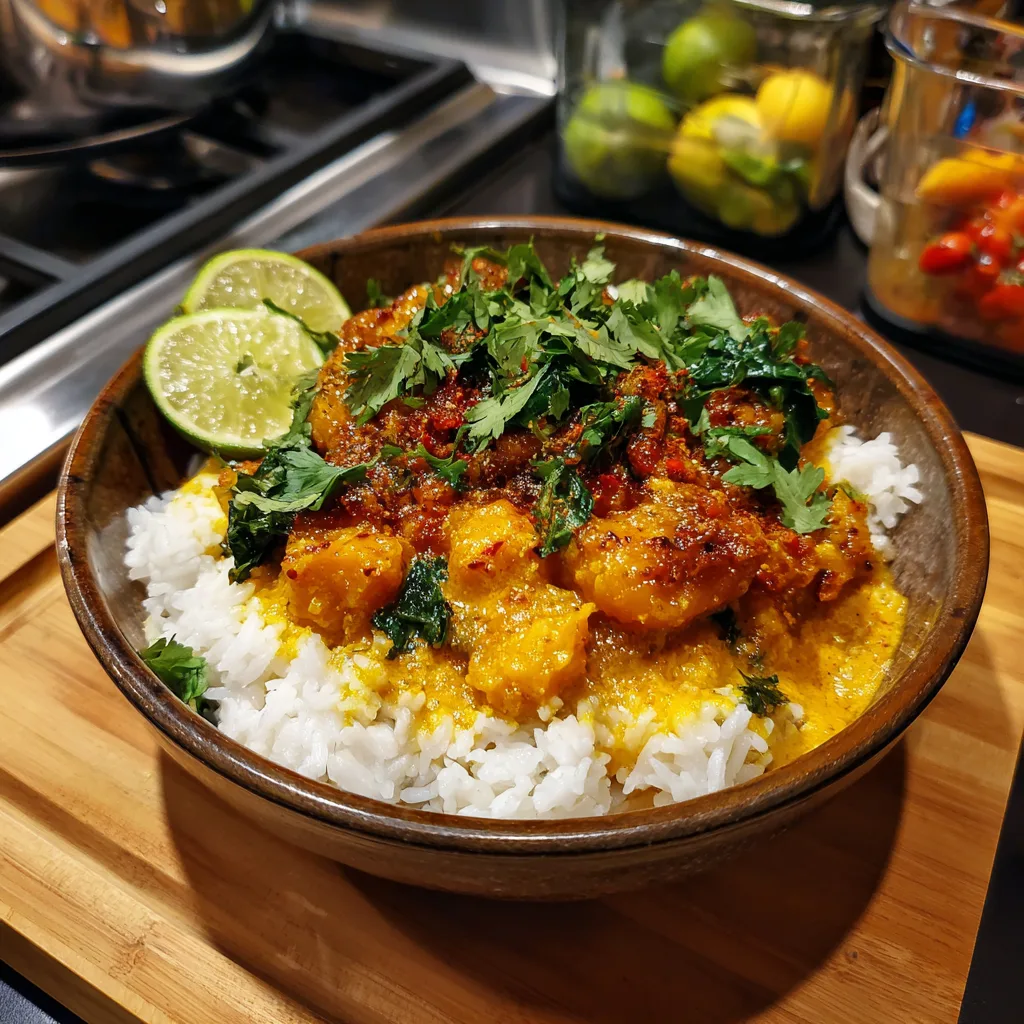
Butternut Squash Panang Curry is the kind of dish that feels both indulgent and nourishing at the same time. The natural sweetness of roasted butternut squash pairs beautifully with the rich, aromatic depth of Panang curry paste and creamy coconut milk. The first time I prepared this curry, I was surprised at how effortlessly the flavors came together. I tried it once with a splash of almond milk in place of part of the coconut milk, and while coconut milk remains my favorite for authenticity and richness, the variation worked surprisingly well. This dish is warming, satisfying, and ideal for cooler evenings when you crave something hearty yet vibrant. The sauce is velvety and fragrant, coating each piece of squash with bold flavor. Served over jasmine rice or with warm naan, this curry becomes a complete and comforting meal that feels restaurant-quality yet is simple enough for a weeknight dinner.
Print
Butternut Squash Panang Curry – Creamy, Comforting Thai-Inspired Perfection
- Total Time: 40 minutes
- Yield: 4 servings
- Diet: Vegan
Description
Butternut Squash Panang Curry is a rich and creamy Thai-inspired dish featuring tender cubes of butternut squash simmered in a fragrant coconut milk and Panang curry sauce. Slightly sweet, mildly spicy, and deeply comforting, this vibrant curry pairs perfectly with steamed rice.
Ingredients
- 1 tablespoon vegetable oil
- 2 tablespoons Panang curry paste
- 1 (13.5 oz) can full-fat coconut milk
- 1/2 cup vegetable broth
- 3 cups butternut squash, peeled and cubed
- 1 red bell pepper, sliced
- 1 small onion, sliced
- 2 cloves garlic, minced
- 1 tablespoon soy sauce
- 1 tablespoon brown sugar
- 1 teaspoon fresh grated ginger
- 1 tablespoon lime juice
- 1/4 cup fresh Thai basil (optional)
- Cooked jasmine rice, for serving
Instructions
- Heat vegetable oil in a large skillet or saucepan over medium heat.
- Add Panang curry paste and sauté for 1–2 minutes until fragrant.
- Stir in coconut milk and vegetable broth, whisking until smooth.
- Add butternut squash, onion, garlic, ginger, and bell pepper. Bring to a gentle simmer.
- Cover and cook for 15–20 minutes, stirring occasionally, until squash is tender.
- Stir in soy sauce and brown sugar. Simmer uncovered for 5 more minutes to slightly thicken.
- Remove from heat and add lime juice and Thai basil.
- Serve hot over jasmine rice.
Notes
- Add tofu or chickpeas for extra protein.
- Adjust curry paste for desired spice level.
- Store leftovers refrigerated for up to 4 days.
- This curry freezes well for up to 2 months.
- Prep Time: 15 minutes
- Cook Time: 25 minutes
- Category: Main Course
- Method: Stovetop
- Cuisine: Thai
Why You’ll Love This Recipe
This curry is creamy without being heavy, naturally vegetarian, and full of bold flavor. It is easy to prepare, highly adaptable, and perfect for meal prep. The balance of sweet squash, savory curry paste, and creamy coconut milk makes every bite deeply satisfying.
Ingredients
(Tip: You can find the complete list of ingredients and their measurements in the recipe card below.)
Ingredients Breakdown
Butternut squash
The star of the dish. Its natural sweetness intensifies as it cooks, creating a soft and tender texture that absorbs the curry sauce beautifully.
Panang curry paste
This aromatic paste delivers the signature flavor of the dish. It typically includes red chilies, garlic, lemongrass, and spices that provide warmth and mild heat.
Coconut milk
Full-fat coconut milk creates a luxuriously creamy sauce. It balances the spice of the curry paste and enhances the dish’s richness.
Vegetable broth
Used to thin the sauce slightly while adding depth. It prevents the curry from becoming overly thick.
Red bell pepper
Adds color, sweetness, and a slight crunch that contrasts nicely with the tender squash.
Yellow onion
Provides a savory base and builds flavor when sautéed before adding the curry paste.
Garlic
Fresh garlic intensifies the aromatic profile of the curry.
Fresh ginger
Ginger adds brightness and warmth that complements the sweetness of the squash.
Soy sauce
Adds umami and saltiness to balance the sweetness of the coconut milk.
Brown sugar
A small amount enhances the overall flavor and balances spice and acidity.
Fresh lime juice
Adds a fresh, tangy finish that lifts the richness of the curry.
Fresh basil or cilantro
Used as garnish for a burst of freshness and herbal aroma.
Directions
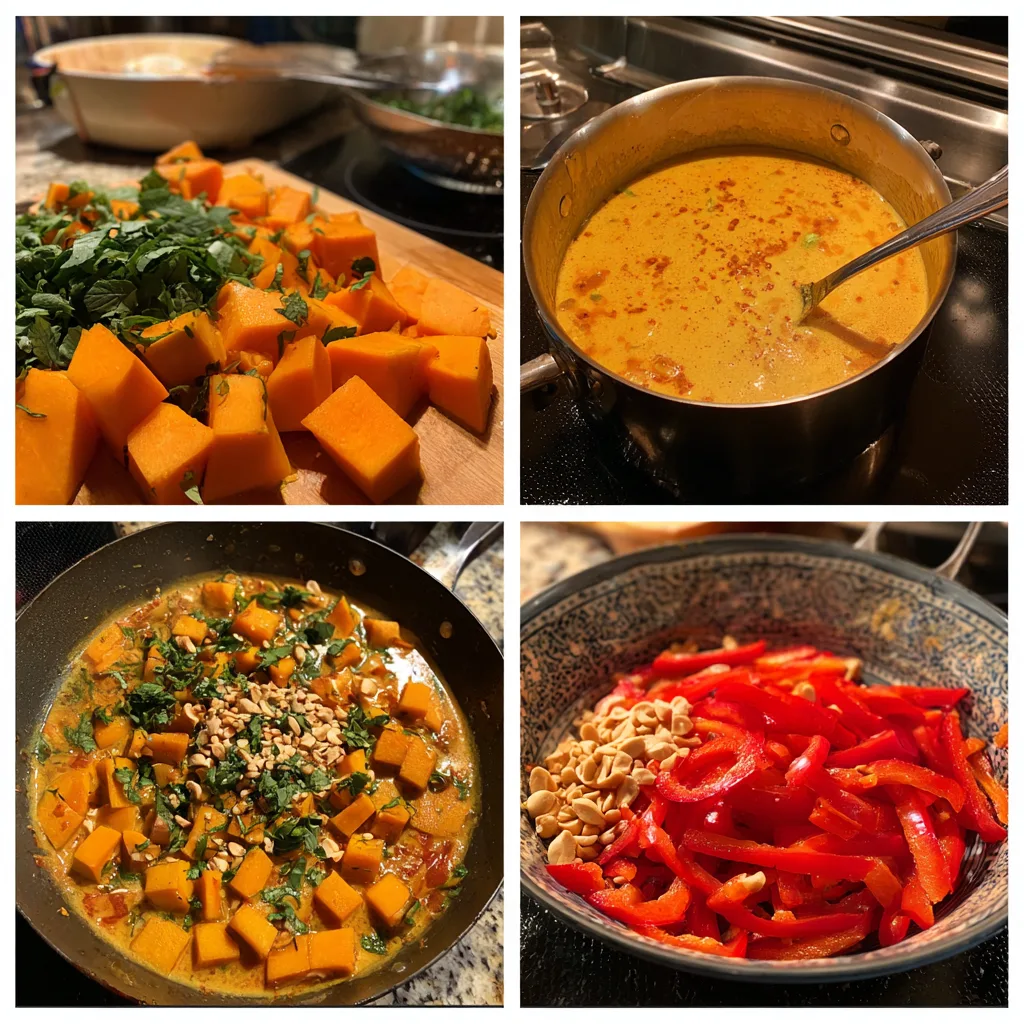
Begin by peeling and cubing the butternut squash into evenly sized pieces to ensure uniform cooking. Heat a large skillet or saucepan over medium heat and add a small amount of oil. Sauté the diced onion until soft and translucent, about 4–5 minutes.
Add the minced garlic and grated ginger, cooking for another minute until fragrant. Stir in the Panang curry paste and cook it gently for 1–2 minutes to release its full aroma.
Pour in the coconut milk and vegetable broth, stirring well to combine with the curry paste. Add the cubed butternut squash and sliced red bell pepper. Bring the mixture to a gentle simmer.
Cover and cook for 15–20 minutes, or until the squash is fork-tender. Stir occasionally to prevent sticking. Once tender, add soy sauce and brown sugar, adjusting to taste. Allow the curry to simmer uncovered for a few more minutes if you prefer a thicker consistency.
Finish with a squeeze of fresh lime juice. Garnish with chopped basil or cilantro before serving. Serve hot over jasmine rice or alongside warm flatbread.
Equipment needed : Must-Have Tools to Get Rolling
Here’s what you’ll want to have on hand:
Silicone Spatula – Durable, heat-resistant silicone spatula perfect for mixing, scraping, and spreading. Gentle on non-stick cookware and easy to clean.
Large pot – You’ll need this to boil the whole cabbage head and soften the leaves.
large bowl –Spacious, durable large bowl ideal for mixing, serving, or food preparation. Made from sturdy material and easy to clean.
Sharp knife – For coring the cabbage and slicing out the thick stem in each leaf. A paring knife works best.
Mixing bowl – A big bowl makes it easier to combine your meat and rice filling evenly.
Cutting board – For prepping cabbage leaves and rolling them like a pro.
Full-Size Blender – is a powerful kitchen appliance for making smoothies, soups, and sauces in large batches.
3-in-1 Air Fryer – This versatile 3-in-1 air fryer offers Air Fry for healthier meals with less oil, Bake for bakery-quality desserts and treats, and Reheat to bring leftovers back to life with crispy, flavorful results
Servings and timing
Servings: 4
Preparation time: 15 minutes
Cooking time: 25 minutes
Total time: 40 minutes
Storage/reheating
Store leftovers in an airtight container in the refrigerator for up to 4 days. The flavors deepen as it rests, making it excellent for meal prep. Reheat gently on the stovetop over low heat or in the microwave, adding a splash of broth or water if the sauce has thickened too much. This curry also freezes well for up to 2 months.
Variations and Customizations
This recipe is wonderfully adaptable. For added protein, consider adding chickpeas, tofu cubes, or even cooked chicken. I have tried adding crispy baked tofu, and it absorbs the sauce beautifully while providing satisfying texture.
If you prefer more vegetables, spinach or kale can be stirred in during the last few minutes of cooking. They wilt quickly and add extra nutrition without overpowering the dish.
For a spicier version, add sliced Thai chili or a pinch of red pepper flakes. If you enjoy deeper nutty flavor, a tablespoon of natural peanut butter stirred into the sauce creates additional richness.
To make the curry vegan, ensure the Panang curry paste does not contain shrimp paste, as some traditional varieties do. Many store-bought versions offer vegan options.
For a lower-fat variation, use light coconut milk, though the sauce will be slightly less creamy. You may also substitute part of the coconut milk with almond milk for a lighter texture, which I found still maintains excellent flavor balance.
Finally, consider serving the curry over brown rice or quinoa for added fiber and a heartier base.
Nutrition and Dietary Info
Approximate nutrition per serving (based on 4 servings, excluding rice):
| Nutrient | Amount per Serving |
|---|---|
| Calories | 380 kcal |
| Protein | 6 g |
| Carbohydrates | 32 g |
| Fat | 27 g |
| Saturated Fat | 18 g |
| Fiber | 6 g |
| Sugar | 9 g |
| Sodium | 520 mg |
Values are estimates and may vary depending on ingredient brands used.
Expert Tips & Customizations
Cut Even Cubes
Uniform squash pieces ensure even cooking and prevent some pieces from becoming overly soft.
Toast the Curry Paste
Briefly cooking the curry paste before adding liquids enhances its depth and aroma.
Adjust Thickness
Simmer uncovered to thicken the sauce or add a splash of broth if it becomes too dense.
Balance Flavors at the End
Taste and adjust lime juice, soy sauce, or sugar just before serving for perfect harmony.
FAQs
Can I use frozen butternut squash?
Yes, frozen cubes work well. Adjust cooking time slightly as they may release extra moisture.
Is Panang curry very spicy?
Panang curry is generally mild to medium in heat, but spice levels vary by brand.
Can I make this ahead of time?
Yes, it tastes even better the next day as the flavors continue to develop.
What can I serve with this curry?
It pairs well with jasmine rice, brown rice, quinoa, or flatbread.
Can I add meat to this recipe?
Yes, thinly sliced chicken or shrimp can be added and cooked until done.
How do I make the sauce thicker?
Simmer uncovered for a few extra minutes or reduce the amount of broth slightly.
Conclusion
Butternut Squash Panang Curry is a comforting, creamy, and flavor-packed dish that delivers restaurant-quality taste with simple preparation. Its balance of sweetness, spice, and richness makes it a versatile addition to your meal rotation. Whether enjoyed fresh or reheated the next day, this curry offers warmth and satisfaction in every bite.
Hungry for more? Visit our website for full recipes and follow us on Pinterest for daily foodie inspo you’ll love to pin!